
Guide · 5 min read
Limited Edition Watches: What the Numbering Really Means
A limited edition is the simplest idea in the watch industry and the most reliably misunderstood. It means a fixed number will be made and no more. Everything else — whether…
A limited edition is the simplest idea in the watch industry and the most reliably misunderstood. It means a fixed number will be made and no more. Everything else — whether that number is small, whether the watch is different from the standard model, and whether anyone will want it later — is a separate question that the word "limited" is designed to stop you asking.
What the promise is, and what it is not
The promise is quantitative. A reference designated as limited has a maximum production figure, and each watch is usually numbered to make the cap visible:
- An engraving on the case back, in the form "47 / 250" or "No. 47 of 250".
- Sometimes on the movement or the rotor instead, visible through a display back.
- Occasionally on a certificate only, with no marking on the watch.
What the promise is not is any statement about the watch itself. Limited editions are frequently a standard reference with a different dial colour, a different hand set, an engraved case back or a presentation box. That is a legitimate thing for a brand to do — it gives a specific group of customers something to buy — but it means "limited" tells you nothing about the movement, the finishing or the build quality, because those are unchanged.
The one detail worth checking carefully is the word numbered. A watch can be limited without being individually numbered, and unnumbered limited editions are a materially weaker proposition, because there is no way to demonstrate which one you have.
What edition sizes actually mean
Limited editions range across four orders of magnitude, and the number chosen tells you what kind of release it is:
| Edition size | What it usually indicates |
|---|---|
| 10–20 | Haute horlogerie or unique-piece territory; frequently highly complicated and priced accordingly |
| Dozens to low hundreds | A genuine cap on a specialist watch. Scarce in the ordinary sense |
| A few hundred to about a thousand | The usual range for a brand's collector-oriented release. Meaningfully limited without being rare |
| Thousands | A standard production model with a different dial and a numbered back. Commercially a variant, not a scarce object |
| Tens of thousands | Marketing scarcity. The number is large enough to be irrelevant to supply |
Collectors broadly draw the line somewhere in the high hundreds: under roughly 500 feels limited, over roughly 5,000 reads as a marketing exercise. That is a convention rather than a rule, and it has to be scaled by the brand. Five hundred pieces from a workshop that makes two thousand watches a year is a large run. Five hundred from a mass-market manufacturer is a rounding error in a quarter's output.
Why scarcity is not value
This is the crux, and it is worth stating plainly: a low production number does not create demand. Value needs both scarcity and desire, and limited editions reliably deliver the first while assuming the second.
The resale evidence is unflattering. Studies of secondary-market results have found that the large majority of limited editions — commonly cited as somewhere around seven or eight in ten — trade at or below the price of their standard-production siblings. The premium charged at launch turns out to have been a marketing premium: buyers paid more because the watch was described as limited, and then discovered that the next buyer was not willing to pay for the description.
The minority that does well tends to share characteristics that have nothing to do with the edition number: the underlying watch was already desirable, the release marked something real, and the brand has a record of honouring its limits. None of that is identifiable with confidence at launch, which is why buying a limited edition as an investment is speculation against a base rate that is working against you.
The claims worth checking before you buy
- Is it individually numbered? Look for the marking, not the marketing.
- What is different from the standard model? If it is a dial colour, price it as a dial colour.
- Does the brand have a record of honouring limits? Some have released extra batches of capped references; that history is the best predictor available.
- Is the edition tied to anything real? A genuine anniversary, a genuine collaboration, a genuine event. Not a colour.
- What does the standard version sell for? This is your reference point, and the honest way to price the limited premium.
- Is the full set present? On limited editions the certificate and box are part of the object more than usual, and their absence is a bigger discount than on a standard watch.
Our valuation worksheet lays out the five factors that actually decide what a watch is worth; edition size is not one of them, and completeness is.
Where limited editions are a straightforwardly good idea
There is a case for them that has nothing to do with money. If a brand you are interested in releases a version of a watch you already wanted, in a colour or configuration you prefer, and the premium over the standard model is small, buying the limited one is simply buying the watch you wanted. The mistake is not buying a limited edition. The mistake is buying a watch you would not otherwise want, because a number on the case back made it feel like an opportunity.
That distinction is worth holding onto, because it is the difference between a purchase and a reaction. A collector with a focus will occasionally find that a limited release is the best example of their theme — and at that point the edition size is a bonus rather than the reason. Our guide to collecting is about building that focus in the first place.
Limited editions in the calculator and digital market
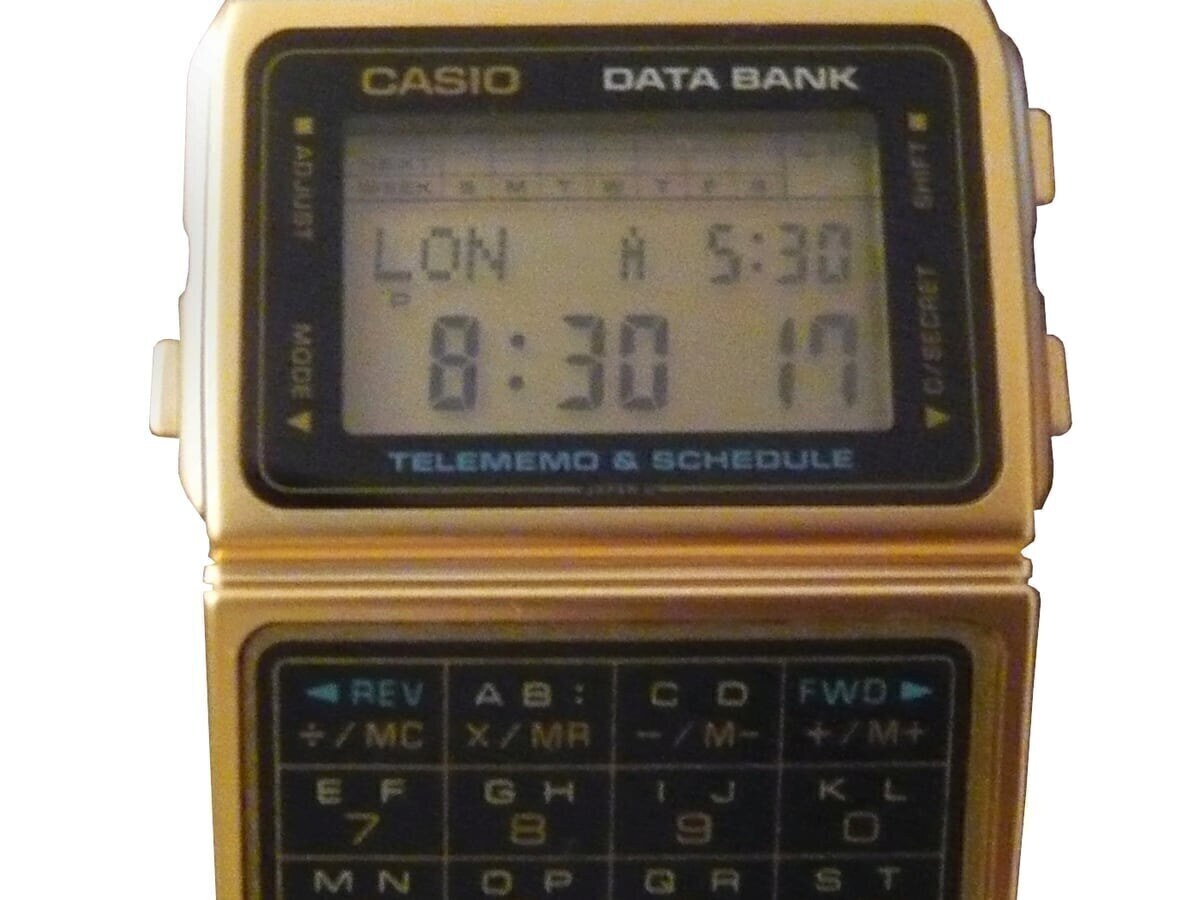
The same mechanics apply, with different numbers. Digital and calculator watches have a long history of commemorative and collaboration releases, some genuinely capped in small numbers and some produced in quantities that made the word "limited" a formality. Because these watches are inexpensive relative to mechanical luxury pieces, the premium attached to a limited version can be a large percentage of the price for a small absolute amount — which makes the comparison with the standard model the single most useful check you can do.
Two practical points for this corner of the market. First, unverified claims about how many were made are common, and a manufacturer's own documentation is the only thing worth relying on; if a production figure cannot be sourced, treat it as unknown rather than as a fact in the listing. Second, condition matters more than edition number on a plastic-cased digital watch, because resin, bezels and straps degrade and are rarely replaceable with period-correct parts. A numbered example in poor condition is a worse object than an unnumbered one in good condition, and the market generally agrees.
Frequently asked questions
What does a limited edition watch mean?
It means the manufacturer has committed to making a fixed maximum number of that reference, usually with each watch individually numbered — for example "47 / 250" engraved on the case back. The commitment is about quantity, not quality: a limited edition can be an ordinary watch in a different dial colour, and often is. The meaningful questions are who set the number, whether the brand has honoured it, and whether anyone wants the result.
How do I know what number my watch is?
Usually engraved or printed on the case back, in the form "no. X of Y" or "X/Y". Some brands put it on the movement instead, and a few issue a certificate rather than a marking. If there is no individual number anywhere, the watch is described as limited but is not numbered, which is a materially weaker claim — and one worth checking before you pay a premium for it.
Are limited edition watches worth more?
Usually not, and often less than the standard model once the initial excitement passes. Evidence from resale markets has consistently shown that most limited editions trade at or below their standard siblings, because the premium charged at launch was a marketing premium rather than a scarcity premium. A minority do well, and they are hard to identify in advance. Buying a limited edition as an investment is speculation with an unflattering base rate.
What is a good edition size?
There is no rule, but collectors broadly treat an edition in the hundreds as meaningfully limited and an edition in the thousands as a marketing exercise — a standard watch with a certificate. Below a hundred is genuinely scarce in the ordinary sense, though scarcity by itself still does not create demand. Edition size also has to be read relative to the brand: a 500-piece run from a maker that produces a few thousand watches a year is a large run, and the same number from a mass-market brand is a rounding error.
Do lower numbers sell for more?
Rarely, and far less than sellers imply. Number 1 of an edition occasionally attracts a premium from a specific buyer; numbers in the middle do not. Anyone charging a meaningful premium for a low edition number is selling a feeling rather than a demonstrated market difference.
Can a brand make more if it sells out?
It can, and that is the risk a "limited" claim carries. Some brands have released additional batches of a supposedly capped reference, which permanently damages the credibility of the claim. A manufacturer that honours its limit over decades is the reason collectors trust some brands and discount others, and no individual release can be audited in advance.
This article is editorial. Where a figure is given, it comes from the manufacturer’s published documentation and is dated on the page; where we are expressing a judgement, we say so. Something wrong? Tell us.