
Guide · 6 min read
Watch Collecting: How to Start Without Wasting Money
Collecting watches is not difficult, but it is unusually easy to do expensively by accident. The object is small, the market is large, the information is inconsistent, and…
Collecting watches is not difficult, but it is unusually easy to do expensively by accident. The object is small, the market is large, the information is inconsistent, and every purchase feels like a decision about taste when it is often a decision about information. This guide is about the parts you can control: what to collect, how to judge a piece, what to keep, and which mistakes are worth avoiding rather than learning from.
One clarification, because the search term is ambiguous. "The watch collector" also names at least one well-known pre-owned dealer. This page is not about any business; it is about the activity.
Collecting is not accumulating
The distinction is the whole thing. Accumulating is buying watches. Collecting is building a group of objects that means something together, where each addition is a deliberate answer to a question the collection was already asking.
A useful test before any purchase: can you explain, in a sentence, why this watch belongs in the group? "It is a 1970s Japanese digital because that decade's display technology is what I am interested in" is a collection reason. "It was a good deal" is not. Neither answer is morally better, but only one of them produces something worth having in five years.
Choosing a focus
Almost any coherent theme works, and the narrower it is, the cheaper and more interesting the research becomes. Common approaches:
| Focus | What it buys you | What it costs you |
|---|---|---|
| One maker | Deep knowledge fast; a clear community | Prices rise with everyone else's interest |
| One era | A coherent look; period details you learn to read | Condition problems are common and expensive |
| One function | Technical interest; under-appreciated corners | Narrow resale market |
| One movement family | Genuinely specialist knowledge | Requires opening case backs and reading references |
| One country's industry | Historical depth; good documentation | Sprawling and hard to bound |
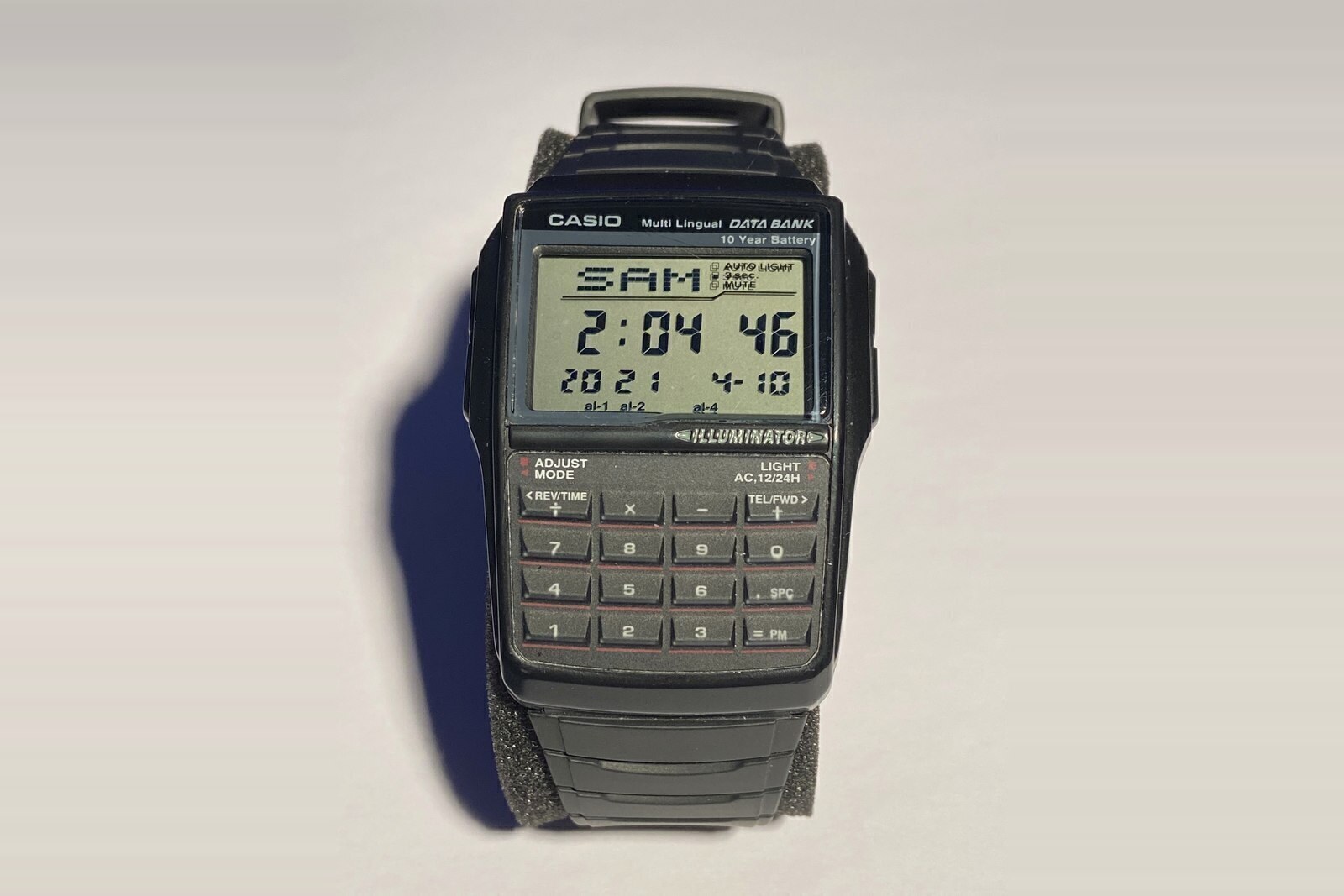
For anyone starting now, a function or an era is usually the better entry point than a maker, because maker-focused collecting tends to be the most crowded and the most sensitive to fashion. A collection of digital watches from a specific decade, or of calculator and databank models from the format's peak, is cheap to enter, well documented if you do the reading, and interesting to people who are not already collectors. Our vintage calculator watch guide covers the practical side of buying in that corner of the market.
Condition, originality and completeness
These three words carry most of the value of a collectible watch and are the three things a new collector is least equipped to assess.
Condition
Condition is not just scratches. For a mechanical watch, it is whether the movement runs correctly and how it has been treated: a polished case has lost metal and original edges, a water-damaged movement has corrosion that will not go away, and a badly relumed dial has lost the patina that made it interesting. Polishing is the most common invisible damage in the market, because a well-polished case looks like a well-kept one to an untrained eye and has lost the sharp edges that identify an original.
Originality
A watch is original when its dial, hands, case, movement and crown are the parts it left the factory with. "Franken" watches — assembled from parts of several examples — are common in older and less-documented corners of the market, and they are usually sold as originals. The tells are subtle: mismatched dial printing, hands of the wrong shape or length, service parts that do not match the period. This is where specialist reference material earns its keep, and where a buyer with a reference book beats a buyer with enthusiasm.
Completeness
Box, papers, original bracelet with all its links, spare strap, and service records. Completeness does not make a watch run better and it does not make it more beautiful, but it is the cheapest provenance you will ever buy, and its absence is a permanent discount. Our valuation worksheet treats completeness as one of the five factors that decide what a watch is worth, and it is usually the easiest one to preserve.
Buying: what to check before you pay
- Identify the reference. Not the model name — the reference number. Then find independent documentation for it, and check the watch against the reference rather than against the seller's description.
- Ask for movement photographs on anything older or expensive. The dial is what you see; the movement is what you are buying.
- Ask what has been replaced. A straight answer is worth more than a perfect one. A replaced crystal is nothing; a replaced dial is a different watch.
- Check the case for polishing by comparing lug shapes and bevels against reference photographs.
- Establish what "serviced" means. It should mean a documented service with a date and a name, not the seller's assurance that it runs fine.
- Assume no warranty unless one is written down. Reputable dealers offer one; private sellers generally do not.
What you should not do is take a price as evidence of quality. The relationship between price and condition in the watch market is loose, and the most expensive watch in a listing is often the one with the best story rather than the best example.
Storage and care
Watches dislike damp, heat and long storage in the dark. A dry drawer at room temperature is fine; a bathroom shelf is not, and neither is anything that gets direct sun. Mechanical watches benefit from being worn or wound regularly, because lubricants stay distributed. Quartz watches should have their cells checked, and a watch going into long storage is better off without a cell in it than with a dying one.
Do not store watches in a way that lets them knock against each other, and do not store a watch with a leather strap in an airtight box while damp. Mildew on a strap is a small problem; mildew inside a case is not.
Records, and why they matter more than you think
Keep a simple record for each watch: the reference, where and when you bought it, what you paid, what has been serviced and by whom, and where the box and papers are. It takes ten minutes per watch and it is the difference between a collection and a pile of watches, both for insurance and for the day you sell. Photograph each watch, including the case back and any markings, and keep the photographs with the record.
It also protects you against your own memory. Collectors routinely cannot remember what they paid for a watch bought five years ago, and the figure they guess is usually higher than the truth.
Where limited editions fit, and where they do not
Limited editions are where new collectors are most often separated from their money, because scarcity sounds like value and is not the same thing. A numbered edition is a manufacturer's promise about quantity, nothing more; whether it becomes desirable depends on the watch and on a market that has not formed yet. Our guide to limited editions sets out how numbering works, why edition size is a poor proxy for worth, and what the resale evidence actually shows.
The short version: buy a limited edition because you want that watch, and never because it is limited.
A reasonable first year
If you want a plan rather than advice: spend the first three months choosing a focus and reading about it, buy one good example of the theme rather than three cheap ones, keep everything that came with it, and write down why you bought it. Then wait a year before the next. That sequence costs the least and teaches the most, and the only thing it asks for is patience — which is, conveniently, the one quality the watch market rewards.
If your interest is specifically the calculator and databank corner, the main calculator watch guide and the Casio model guide are where the model-level detail lives.
Frequently asked questions
How do I start a watch collection?
Pick a focus before you buy anything. Almost every expensive mistake in collecting comes from buying whatever seemed appealing at the time, and a collection with a theme — one era, one function, one maker, one movement type — is more interesting and easier to research than a drawer of unrelated watches. Then buy slowly, keep the paperwork, and buy the best example of the theme you can afford rather than several mediocre ones.
How many watches should a collection have?
There is no correct number, and the question is really about intention. A collection you wear has a natural ceiling around five to seven pieces because anything beyond that sits unworn and needs servicing anyway. A collection you study can be any size. The useful test is whether you can say why each piece is there; if the answer is "it was cheap", it is stock rather than a collection.
Is watch collecting a good investment?
For the overwhelming majority of watches, no. Most watches lose value, servicing costs money rather than preserving it, and the pieces that appreciate are a small and unpredictable minority. Treat a watch as a thing you use and enjoy, and treat any financial return as an accident. Anyone selling you a watch as an investment is selling you something else at the same time.
Should I keep the box and papers?
Yes, always, and not because the box is valuable in itself. A complete set — box, papers, original strap, spare links, service receipts — is evidence of provenance, and provenance is what a future buyer is paying for. Losing it reduces what the watch is worth and makes it harder to sell, on any watch where the market cares about completeness. Keep everything, including the receipts you will be tempted to throw away.
Do collected watches need servicing if they are not worn?
Mechanical watches do, eventually: lubricants migrate and thicken whether the watch runs or not, and a movement left for a decade or more can need work before it can safely be run. Opinions differ on the interval, and running a watch regularly is generally better for it than leaving it stopped. Quartz watches are less demanding, but their cells should be removed or checked so they cannot leak.
What is the biggest mistake new collectors make?
Buying too fast, usually several similar watches in the first year. The second biggest is buying a watch with a replaced dial, hands or case parts without knowing it, which is why provenance research before purchase matters more than the price. The third is buying for a market that does not exist — assuming a watch will be easy to sell later because it was easy to buy.
Models referenced in this guide
Every specification on these pages is sourced from manufacturer documentation.
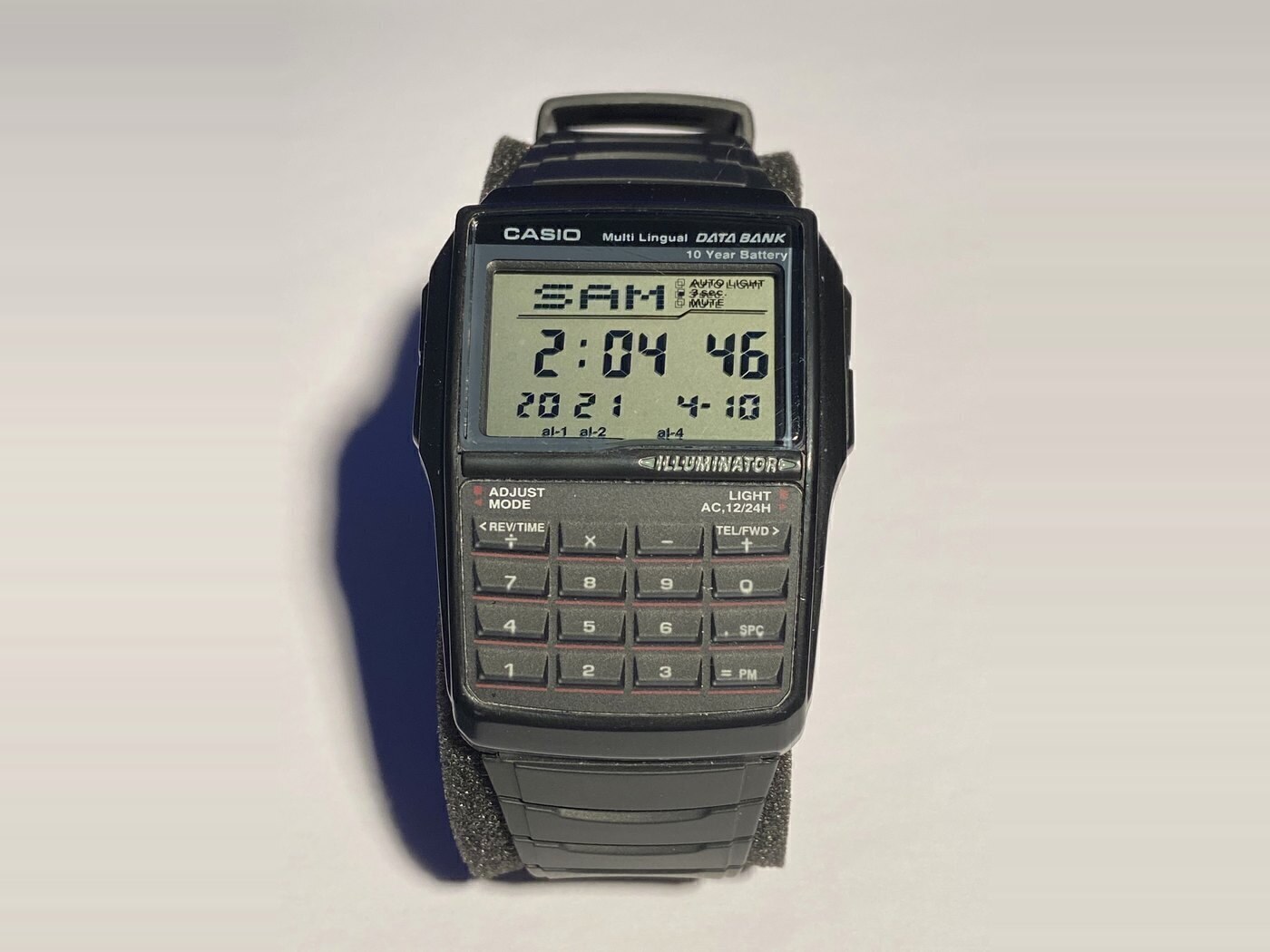
Casio DBC-32
DBC-32-1A
The chunky, resin-strapped Data Bank: same calculator, converter, telememo and ten-year battery as the DBC-611 in a wider case with a rubber band.
- Case
- 50.4 × 37.4 × 12.0 mm
- Weight
- 34 g (resin band)
- Battery
- CR2025
- Water resistance
- Listed by Casio as water resistant, without a published depth rating
Checked 19 Nov 2026 · Amazon
This article is editorial. Where a figure is given, it comes from the manufacturer’s published documentation and is dated on the page; where we are expressing a judgement, we say so. Something wrong? Tell us.